CúspideTravel Plan my trip
Tatacoa Desert

Home/Destinations/Tatacoa Desert

Huila · Villavieja

Tatacoa Desert

A journey through labyrinths of earth, starry skies and the silence of the desert

Climate

Hot and dry (25-40°C)

Best time to go

Dec-Feb and Jun-Aug

Ideal duration

2-3 days

Ideal for

Astronomy, geology, meditation

The territory

A Journey to the Heart of Silence

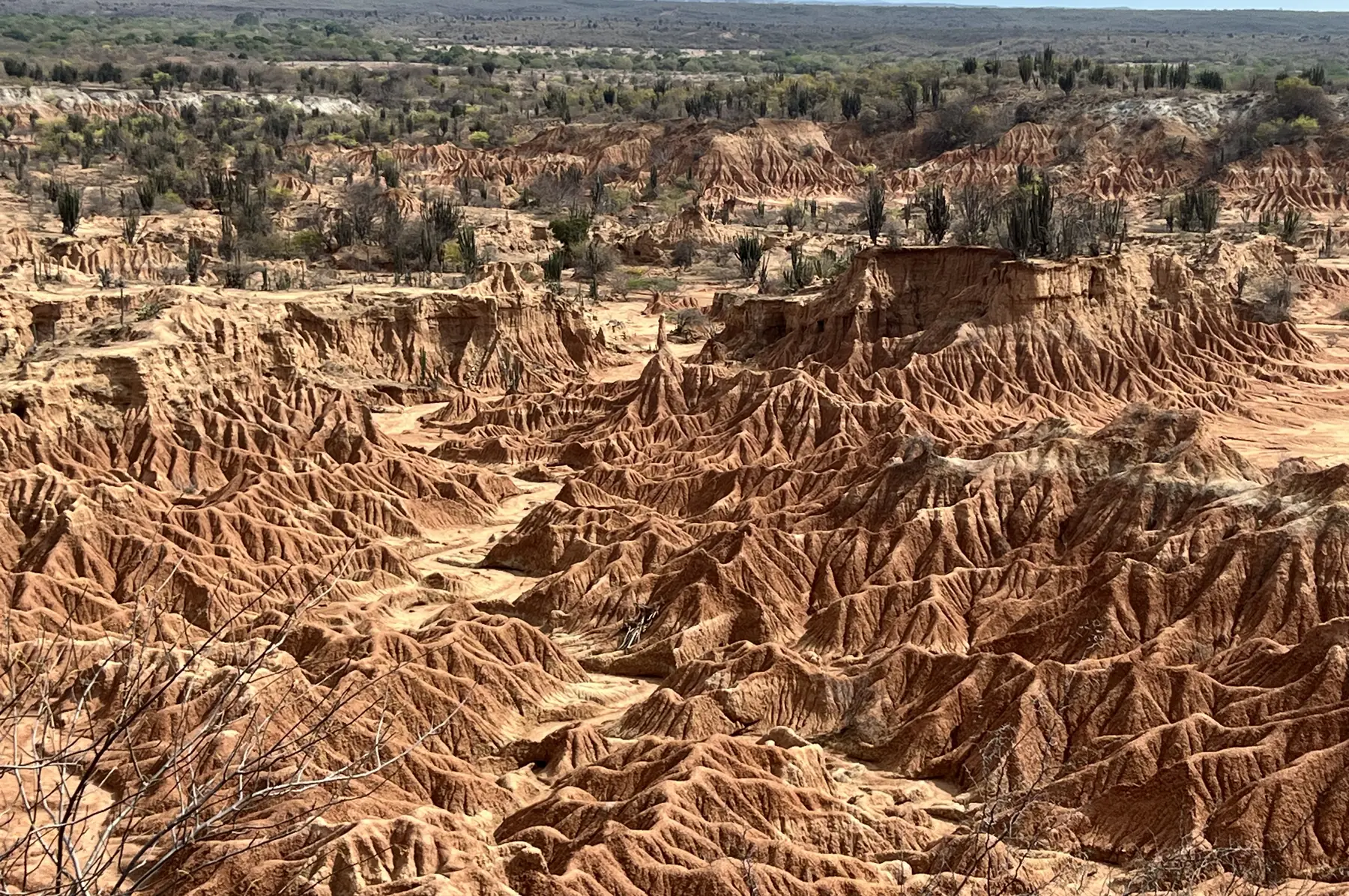
The Tatacoa Desert, Colombia's second largest arid area, is a surreal landscape of eroded formations, labyrinthine canyons and colours ranging from reddish ochre to grey, creating a setting that seems to belong to another planet. This desert, which is in fact a tropical dry forest, offers a unique experience in which the silence, the immensity of the landscape and the extraordinary visibility of the night sky create perfect conditions for introspection and reconnection with what matters.

At Cúspide Travel we have designed experiences that let you connect with the magic of the Tatacoa in a conscious and transformative way, combining the exploration of its fascinating geological formations with practices that strengthen your connection with yourself and with the life force that, paradoxically, fills this apparent desert emptiness. Every route is planned to offer not only an outer journey through dreamlike landscapes, but also an inner journey of transformation and expanded awareness.

What you travel through

Essential places

Red Desert (Cuzco)

The most emblematic area of the Tatacoa, with its characteristic eroded formations in reddish ochre that create a labyrinthine landscape of extraordinary beauty. Our experiences include contemplative walks along trails winding between these formations, with time devoted to conscious observation of the play of light and shadow the sun creates over this surreal landscape. We include practices of presence and connection at selected places where the energy of the desert is felt with particular intensity, inviting you to experience the contrast between the apparent outer aridity and the richness of the inner landscape.

Grey Desert (Los Hoyos)

A less well-known but equally impressive area, marked by grey formations that create a ghostly, lunar landscape. Our experiences include routes through this sector, which offers an interesting contrast with the Red Desert and reveals the geological diversity of the Tatacoa. We include moments of silent contemplation at places such as the Valle de los Xilópalos, where the petrified remains of ancient trees remind us that this desert was once a lush tropical forest, offering a powerful metaphor for impermanence and the constant transformation of all forms.

Astronomical Observatory

Thanks to its low humidity, minimal light pollution and location close to the equator, the Tatacoa offers exceptional conditions for stargazing. Our experiences include night sessions at the Astronomical Observatory, where dedicated astronomers share their knowledge of constellations, planets and deep-sky objects visible through telescopes. Beyond the scientific side, we offer a contemplative experience of the starry sky, with practices that invite you to sense your place in the cosmos and connect with the immensity and mystery of the universe, creating a perfect context for expanded awareness and cosmic perspective.

Cusco Natural Pool

A refreshing oasis in the middle of the desert, this natural pool fed by a spring offers a perfect contrast to the surrounding heat and aridity. Our experiences include moments of rest and renewal here, with body-presence practices in the water that heighten the sense of contrast and gratitude for this gift of nature. The pool, ringed by a few palms and vegetation that survives thanks to the spring, creates a microclimate that attracts birds and other animals, offering a chance to observe how life always finds ways to adapt, even in the most demanding environments.

Sunrise and Sunset Viewpoints

The Tatacoa offers some of the most spectacular sunrises and sunsets in Colombia, when the low light of the sun turns the desert landscape into a display of colour and long shadows. Our experiences include visits to selected viewpoints at these magical times of day, with silent contemplation practices that invite you to take in the beauty of the moment fully. These transitions between day and night, or night and day, create a natural context for reflecting on the cycles, changes and transitions in our own lives, offering valuable perspectives on our personal processes.

Villavieja

A small town that serves as the gateway to the desert, with a quiet and authentic charm. Our experiences include time to explore its streets of traditional architecture, visit the Palaeontological Museum displaying fossils found in the region (evidence that this desert was once an inland sea), and enjoy the hospitality of its inhabitants. Villavieja, with its unhurried pace and its connection to the surrounding natural environment, offers an interesting contrast to the desert experience and a chance to appreciate human adaptation to this demanding setting across generations.

Palaeontological Museum

Located in Villavieja, this small but fascinating museum holds an important collection of fossils of the megafauna that lived in the region millions of years ago, including mastodons, giant ground sloths and giant tortoises. Our experiences include guided visits that reveal the surprising geological and palaeontological history of the Tatacoa, offering a sense of time that greatly expands our understanding of the place. The museum, run with dedication by local experts, provides a scientific context that complements the sensory and contemplative experience of the desert, creating a fuller understanding of this extraordinary landscape.

Magdalena River

The mighty Magdalena River flows close to the desert, creating a fascinating ecological contrast. Our experiences may include visits to its banks, where the landscape changes dramatically from desert aridity to riverside abundance within a few kilometres. This contrast offers a powerful metaphor for the diversity of life and the importance of water as a vital element, prompting reflection on the contrasts and complementarities in our own experience. The river's presence also helps to understand the geological formation of the Tatacoa, the result of complex processes of water erosion over millions of years.

What is practised

Conscious experiences here

Meditation in the Desert

Guided meditation and presence practices at selected places in the desert, drawing on the particular quality of the silence and the vastness of the landscape. Ideally held at sunrise or sunset, when the light creates special effects on the rock formations, these practices invite you to experience an inner stillness that mirrors the outer stillness of the desert, supporting deep states of presence and connection.

Contemplative Astronomy

Night sessions observing the starry sky that combine astronomical knowledge with contemplative practice. Beyond identifying constellations and celestial objects, these experiences invite a deeper relationship with the cosmos, using the immensity of the night sky as a mirror for the expansion of your own awareness and as a context for reflecting on your place in the universe.

Conscious Photography

Guided photography sessions that go beyond simply taking pictures to become a practice of presence and connection. With specific techniques combining mindfulness with creative expression, you will learn to use photography as a form of dialogue with the desert landscape, capturing not only its outer beauty but also your inner experience of the moment.

The Silence Walk

Walks along selected desert trails, made in complete silence as a practice of presence and connection. Guided but with no spoken explanations along the way, these walks invite a direct, non-conceptual experience of the desert landscape, sharpening your senses and creating space for a deeper relationship with the surroundings and with yourself.

The table

Local cuisine

Signature Dishes

Distinctive Local Products

Traditional Drinks

Where to stay

Recommended accommodation

Lodgings in the Desert

Simple but welcoming lodgings inside the desert, offering the unique experience of sleeping surrounded by the desert landscape and under a spectacular starry sky. They are usually rustic buildings adapted to their surroundings.

Recommended: Bethel Bio Luxury Hotel, Noches de Saturno, El Portal de la Tatacoa, Astronomía La Tatacoa.

Hotels in Villavieja

Accommodation options in the town of Villavieja, the gateway to the desert. They range from simple places to establishments with more services, generally with traditional architecture and a family atmosphere.

Recommended: Hotel Casa del Río, Hotel Boutique Tatacoa, Hotel Oasis Tatacoa, Hotel El Camino.

Glamping and Special Stays

Unique accommodation that is an experience in itself: geodesic domes with transparent roofs for stargazing, luxury tents or rooms designed in the spirit of the desert landscape.

Recommended: Bio Luxury Tatacoa, Tatacoa Star Gazer, Tatacoa Domo, Desierto Luxury Camp.

Camping

For the more adventurous, there are designated camping areas inside the desert, offering the most immersive experience and the best view of the night sky. Some sites provide basic facilities such as toilets and showers.

Recommended: Camping El Cusco, Camping Observatorio Astronómico, Camping Los Hoyos, Camping Desierto Estrellado.
Before you leave

Tips for conscious travellers

Best Time to Visit

The Tatacoa can be visited all year round, but the driest seasons are usually December-February and June-August, ideal for walking the desert and for stargazing. The rainy seasons (March-May and September-November) can make some areas harder to reach and reduce night-sky visibility. For stargazing it is best to avoid full-moon nights and choose new-moon nights, when the darkness shows the stars at their best. Note that the climate is extremely hot during the day (it can exceed 40°C) and relatively cool at night, with a marked temperature range.

Getting There and Around

The most common way to reach the Tatacoa is via Villavieja, a small town about 40 km from Neiva (the capital of Huila, with an airport served by flights from Bogotá). From Neiva you can take a bus to Villavieja (about 1 hour) and from there arrange local transport (moto-taxis, jeeps or bicycles) to go into the desert. Tours that include transport can also be booked directly from Neiva. Within the desert, the options are guided walks, bicycle routes, moto-taxis or off-road vehicles. Distances between the main points of interest are relatively short, but the intense heat makes it important to plan journeys well and carry enough water.

What to Bring

Sustainable Practices

With what intention

Any of the five experiences can be lived here

The destination provides the landscape; the experience defines the inner work done within it.

Next step

Does this territory call you?

Write to us and we will build the route around the intention you are looking for.